
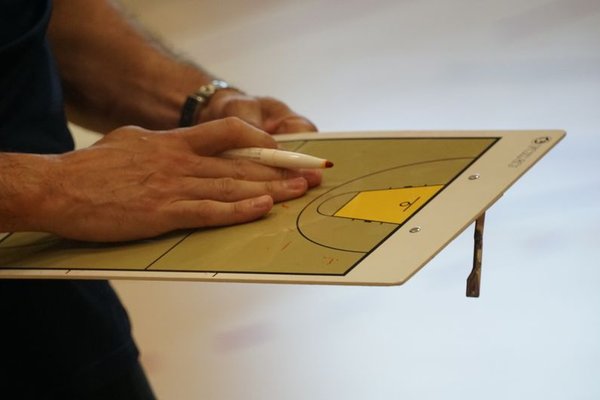
Formations remain football’s quickest visual shorthand. A team sheet may show a 4-3-3, 3-4-2-1 or 4-2-3-1, giving supporters an immediate idea of where players will begin. Yet the best soccer formations 2026 coaches use are increasingly fluid. One shape builds possession, another protects against counters and a third appears when the team defends deep.
That does not make the numbers meaningless. They still reveal likely relationships, spacing and roles. The key is to treat a formation as a starting framework rather than a rigid diagram that survives every phase of the match.
Why modern formations keep changing
Elite teams now analyse opponents in extraordinary detail. Coaches adjust pressing routes, midfield numbers and defensive coverage to solve a specific problem. Five substitutions also make major in-game changes easier: a back four can become a back three without waiting for the next match.
UEFA’s recent technical analysis has repeatedly emphasised adaptability, compactness, goalkeeper involvement and coordinated movement. That helps explain why modern soccer formations are judged less by their printed numbers and more by how effectively they transform.
The 4-3-3 remains the reference point
The 4-3-3 formation provides natural width, three central midfielders and a clear front line for pressing. With the ball, full-backs may advance outside the wingers or move into midfield. The number six can stay behind the attack while two number eights support higher areas.
Without the ball, the shape often becomes 4-1-4-1 or 4-5-1. The wingers drop beside the midfielders while the centre-forward screens passes into central areas. This flexibility makes 4-3-3 useful for possession teams and aggressive pressing sides.
Strengths of 4-3-3
It covers the pitch naturally and creates useful triangles for passing. Three forwards can press a back line, while wide players stretch opponents. The midfield can be balanced with a holding player, a runner and a creator.
Potential weaknesses
The lone striker may become isolated, and space can appear behind attacking full-backs. If the midfielders spread too far apart, opponents can counter through the centre. Success depends on coordinated movement rather than the label itself.
The 4-2-3-1 offers security and clarity
The 4-2-3-1 remains popular because two deeper midfielders protect the centre while a number ten links midfield and attack. The wide players can stay outside, move into half-spaces or run beyond the striker.
This formation adapts easily. One holding midfielder may drop between centre-backs during build-up, allowing the full-backs to advance. In defence, the attacking midfielder joins the striker to press or drops back to form a compact 4-4-1-1.
The double pivot is its central strength. One player can engage while the other covers, reducing exposure after possession is lost. The risk is predictable circulation if both remain too deep and nobody carries the ball through midfield.
The 4-4-2 is simpler than it looks
The classic 4-4-2 has not disappeared. Its two compact lines protect central space, while two forwards can press centre-backs and provide immediate targets after a regain. It remains especially useful for organised defending.
Modern versions rarely attack as two flat lines. A wide midfielder may move inside, one striker may drop between the lines and a full-back may supply width. Teams can defend in 4-4-2 before building or attacking in a completely different shape.
Its main challenge is central numbers. Three-player midfields can overload the two central midfielders unless a striker or winger drops to help. Coaches compensate through compact distances, pressing direction and disciplined wide players.
The back three formation is firmly established
A back three formation usually appears as 3-4-3, 3-4-2-1 or 3-5-2. Three centre-backs provide coverage across the width of the pitch, while wing-backs can advance aggressively. Against two opposing forwards, the defence may retain a spare player.
The 3-4-2-1 is particularly flexible. Two attacking midfielders operate behind a central striker, often occupying the half-spaces. Wing-backs hold width, giving the front three freedom to combine centrally.
When defending, many back-three teams become a back five. That can protect the penalty area but may concede territory if the wing-backs are pinned deep. UEFA tactical analysis has highlighted how opponents create dilemmas by moving wing-backs between low, half-space and high positions.
Why coaches choose a back three
It can improve build-up by spreading three defenders against a press. One centre-back may step into midfield, and the wing-backs create high wide options. It also suits squads with athletic wide players and several strong central defenders.
Where it can be exposed
Space behind the wing-backs is an obvious target. The outside centre-backs may be dragged into wide one-against-one situations, while the midfield can be outnumbered in a 3-4-3. Cover and communication must be precise.
Possession shapes are changing the language
Many top teams now discuss structures such as 3-2-5 or 2-3-5 when describing possession. These are not necessarily starting formations. They show how players occupy five attacking lanes while maintaining support behind the ball.
A team listed as 4-3-3 might create a 3-2-5 by moving one full-back into midfield and keeping the other deeper. Another may form the back three by dropping a midfielder. The objective is to stretch the opponent, occupy spaces between defenders and remain secure against a counter.
This phase-based thinking is central to modern soccer formations. The same player may be a full-back without the ball, a midfielder during build-up and an attacker near the box.
How coaches select the right formation
No formation is automatically superior. Coaches consider player qualities, the opponent’s press, available width, transition risk and the areas they want to overload. A system should make the team’s strongest relationships easier to repeat.
They also plan transformations. How quickly can the attacking shape recover after losing possession? Who protects the centre when a defender steps forward? Which players run beyond the striker? The answers matter more than whether the graphic says 4-3-3 or 3-4-2-1.
Frequently asked questions
What is the most popular soccer formation in 2026?
The 4-3-3 and 4-2-3-1 remain common reference shapes, while back-three systems are firmly established. Exact popularity varies by competition and coaching style.
Is a back three defensive?
Not inherently. High wing-backs and advancing centre-backs can make it aggressive. It becomes more defensive when the wing-backs retreat to create a back five.
Why do formations change during matches?
Teams use different structures for build-up, pressing, deep defence and chance creation. Substitutions and tactical adjustments can also change responsibilities.
Which formation is best for beginners?
A clear 4-3-3 or 4-4-2 can make spacing and responsibilities easier to understand. The best choice still depends on the players available and the principles being taught.
The shape is only the beginning
The formation landscape in 2026 is defined by flexibility rather than one dominant diagram. The 4-3-3, 4-2-3-1, 4-4-2 and several back-three variations all remain relevant. What separates effective teams is their ability to transform those shapes while keeping roles, distances and decisions clear.