
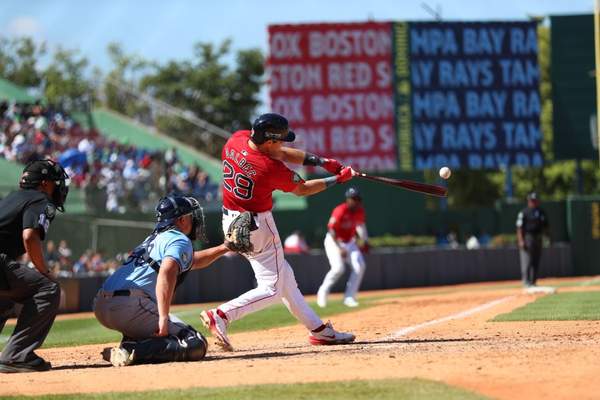
Every February, baseball shifts from winter speculation to actual lineups, bullpen sessions and sunlit exhibition games. MLB spring training is the bridge between the offseason and Opening Day: a period in which established players prepare for the season, prospects get a closer look and clubs make their final roster decisions. It is also one of the easiest ways for fans to see Major League players in smaller, more relaxed ballparks.
The Grapefruit League and Cactus League are not separate levels of baseball, and teams do not qualify for the regular season through them. They simply describe the two geographic groups in which MLB clubs train and play exhibition games.
How MLB Spring Training Works
Spring training usually begins when pitchers and catchers report in mid-February. Position players arrive shortly afterward, followed by the first full-squad workouts. Exact report dates vary by club and year, so fans should check the official spring training schedule rather than assume every team starts together.
Early camp is focused on conditioning, defensive drills, bullpen work, batting practice and fundamentals. Exhibition games generally begin in the second half of February and continue through most of March. By the final week, clubs are building regular-season routines, stretching starting pitchers deeper into games and reducing the roster toward its Opening Day size.
Who Is Invited to Camp?
Every player on a club’s 40-man roster is part of Major League camp. Teams also invite players on minor-league contracts, commonly called non-roster invitees. They may include top prospects, veterans trying to win a job, depth players and catchers needed to handle the large number of pitchers in camp.
A non-roster invitation does not place a player on the 40-man roster. To carry that player on the active roster for Opening Day, the club normally must create a 40-man spot first. That distinction is why late-camp news can involve options, releases, reassignments and contract selections.
Grapefruit League vs Cactus League
The Grapefruit League is based in Florida, while the Cactus League is based in Arizona. Fifteen MLB teams train in each state. The games serve the same competitive and developmental purposes, but the fan experience can feel different.
The Grapefruit League in Florida
Grapefruit League sites are spread across several parts of Florida, including the Gulf Coast, central Florida and the Atlantic side. That wider geography makes planning important. A fan hoping to attend games at multiple parks may face longer drives, so it helps to choose a base near preferred teams and study the schedule before booking accommodation.
Florida also offers easy combinations with beaches, theme parks or coastal towns, depending on the training location. Weather is generally warm, although rain and humidity can affect plans.
The Cactus League in Arizona
Cactus League teams are concentrated in the Phoenix metropolitan area. Fifteen clubs use 10 stadiums, with several facilities shared by two teams. The compact layout makes it practical to see different clubs and ballparks during one trip without repeatedly changing hotels.
For example, a fan could attend an afternoon game in Scottsdale and choose another nearby stadium the next day. That flexibility suits visitors who want a baseball-heavy itinerary. Daytime sun can be strong, so shaded seating, water and sunscreen deserve attention when selecting tickets.
Do Spring Training Games Count?
Spring training games are exhibitions. Their results do not count toward regular-season standings, playoff qualification or a team’s official record. A club can finish near the bottom of its spring standings and still have an excellent season.
That does not make the games meaningless. An established star may use an at-bat to work on timing rather than chase a result. A pitcher may throw a certain pitch repeatedly because coaches want to evaluate it. A prospect or non-roster veteran, however, may be competing directly for a bench or bullpen role.
Spring statistics need context. A hitter’s high average may come in a small sample against mixed-quality pitching, while a starter’s poor earned run average may reflect experimentation. Teams examine health, pitch quality, defensive decisions, plate discipline and roster fit, not just the box score.
What Fans Should Expect at a Game
Spring games tend to be more informal than regular-season games. Starters often leave early, especially during the first few weeks, and later innings can feature prospects wearing high uniform numbers. Lineups change frequently, split-squad days may send one group to one venue and another elsewhere, and scheduled pitchers can change with little notice.
Fans travelling to see one specific player should target a home game later in camp while accepting that appearances are never guaranteed. Planning more than one game reduces the risk of missing a favourite player. Arriving early can also be worthwhile because practice fields may offer close views of warm-ups, although access rules differ by complex.
How Teams Use the Final Weeks
As Opening Day approaches, the spring training schedule begins to resemble regular-season preparation. Starting pitchers increase their workloads, everyday players receive more consecutive at-bats and clubs test likely batting orders and defensive combinations.
Roster cuts also become more significant. Some players are optioned or reassigned to minor-league camp, while others are released or retained as depth. The final decisions often centre on the last bench position, bullpen roles, backup catcher and injury replacements. Contract status matters because some players can be sent to the minors more easily than others.
Readers following those decisions may also find MLB regular season structure, how the 40-man roster works and an Opening Day roster guide useful as internal reference topics.
Frequently Asked Questions
Why is it called the Grapefruit League?
The name became associated with spring training in Florida, a state long linked with citrus growing. Today it is the common label for the 15 MLB teams that hold camp and play exhibitions there.
Why is Arizona called the Cactus League?
The name reflects Arizona’s desert landscape. The league includes the 15 teams that train in the Phoenix metropolitan area and play at its spring ballparks.
Do spring training games affect the regular season?
No. The scores and standings are separate from the regular season. The games matter for preparation, health checks and roster evaluation, but they do not give a team an advantage in the official standings.
When should fans visit spring training?
Early March is often a useful balance: camps are fully active, most players are still present and the exhibition schedule is busy. Later games may feature regular starters for longer, but roster cuts can reduce the number of prospects in Major League camp.
What Spring Training Really Tells Us
MLB spring training is preparation with competition built into it. The Grapefruit League and Cactus League provide the setting, but the central story is how teams move from oversized camp rosters to an Opening Day club. Fans can enjoy the results without treating every score as a forecast. Watch who is healthy, how roles are changing and which players are earning longer looks; those clues usually matter more than the standings.