
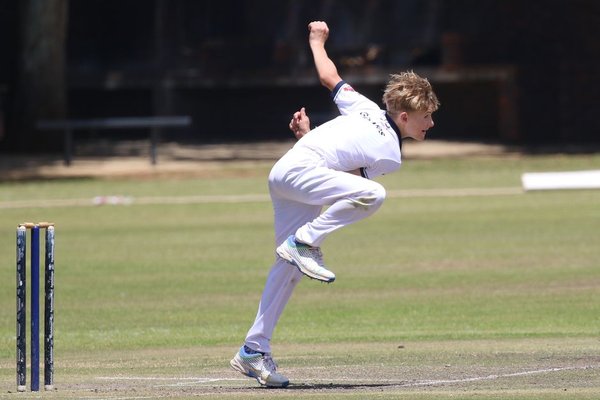
Cricket commentary can make the field sound like a map full of secret locations: first slip, backward point, deep square leg, silly mid-on. The names feel complicated until you realise that most cricket fielding positions simply describe where a fielder stands in relation to the batter and the pitch. Once you learn a few reference points, you can look at a field and understand what the captain is trying to do.
The easiest way to picture the field is from the striker’s point of view. For a right-handed batter, the off side is to the batter’s right and the leg side, or on side, is to the left. For a left-handed batter, those sides reverse. Close positions are often attacking catching spots, while deeper fielders are more likely to stop boundaries and control scoring.
A simple cricket field map in words
Imagine looking down from above with the pitch running through the middle. The wicketkeeper is directly behind the striker’s stumps. On a right-handed batter’s off side, the area behind the bat may include slip and gully. Point sits roughly square of the wicket, cover is further forward, and mid-off is straighter toward the bowler’s end. On the leg side, square leg is roughly level with the batter, mid-wicket is forward of square, and mid-on is straighter. Fine leg sits behind square on the leg side, while third man occupies a similar deep area behind square on the off side.
Add “deep” and the same basic position usually moves closer to the boundary. Deep cover, deep mid-wicket and deep square leg are boundary-saving versions of familiar positions. Add “short” and the fielder comes closer. Words such as “fine,” “backward” and “forward” make smaller changes to the angle.
The main off-side fielding positions
Slip
A slip fielder stands behind the batter on the off side, next to the wicketkeeper. Slips are there mainly for edges from the bat, especially when fast or swing bowlers are trying to move the ball away. Teams can use one slip or a cordon of several slips, with spacing adjusted for the bowler’s pace and the expected path of an edge.
Gully
Gully is wider than the slips and usually a little more square. It is another catching position for outside edges, but it can also intercept hard cuts and defensive shots that fly away from the bat. When a captain adds a gully, it often signals a plan aimed at finding the outside edge.
Point, cover and mid-off
Point is close to square on the off side and is commonly used to stop cuts. Cover sits further forward, between point and mid-off, where a quick fielder can save runs from drives. Backward point sits slightly behind square, while extra cover is more forward and straighter than cover. Mid-off is straighter again, near the bowler’s end.
Third man
Third man is behind square on the off side, usually much deeper than slip or gully. The position is useful against edges, late cuts and shots deliberately guided behind point.
The main leg-side fielding positions
Mid-on and mid-wicket
Mid-on is the leg-side partner of mid-off, positioned fairly straight. Mid-wicket sits wider, between mid-on and square leg. Batters often work or attack the ball through this area, so captains may push a fielder back to deep mid-wicket when boundary protection matters.
Square leg and fine leg
Square leg is approximately level with the batter on the leg side. Deep square leg is closer to the boundary and is often used against pulls, sweeps and other cross-batted shots. Fine leg is behind square and closer to the line directly behind the batter. The “finer” the position, the closer it moves toward the wicketkeeper’s direction.
Short leg and silly point
Short leg is a close catching position on the leg side, often used against spin or when the ball may pop up from the bat or pad area. Silly point in cricket is the close off-side equivalent, stationed very near the batter in front of point. “Silly” indicates an extremely close position, so these fielders need fast reactions and suitable protection.
Why captains keep moving fielders
A field is not a fixed diagram. Captains adjust it according to the bowler, batter, pitch, match format and score. A new batter facing a swinging ball may see slips and a gully waiting for an edge. Later, if that batter begins scoring freely, a close catcher may be moved to the boundary.
For example, imagine a right-handed batter repeatedly cutting short, wide balls through point. The captain could move point slightly backward, place a fielder at deep point, or ask the bowler to change line. If the same batter starts pulling short balls, deep square leg or deep mid-wicket may become more important. The field can therefore reveal the bowling plan before the next delivery is bowled.
How to read a field quickly while watching
Start with four anchors: wicketkeeper, slips, point and square leg. Then identify which fielders are in front of square, behind square, close to the bat or near the boundary. Listen for modifiers too. “Deep” means farther out, “short” means closer in, “backward” means behind the square line, and “fine” means closer to the line running behind the batter.
These names describe traditional areas rather than painted boxes on the grass. A fielder can stand between two recognised positions, so commentators may use slightly different labels. Understanding the general angle and purpose is more useful than memorising an exact spot.
Frequently asked questions
How many cricket fielding positions are there?
There is no single fixed number because many positions have variations such as short, deep, fine, wide, backward and forward. The familiar names are reference points that captains adjust to suit each delivery and match situation.
What is the difference between slip and gully?
Both are off-side catching positions behind the batter, but gully is generally wider and more square than the slip cordon. Slips target edges closer to the wicketkeeper, while gully covers wider edges and some cut shots.
What does deep square leg mean?
Deep square leg is a leg-side fielder positioned around square of the wicket and close to the boundary. The role commonly involves stopping or catching pulls, sweeps and other shots hit strongly across the line.
Do fielding positions change for a left-handed batter?
Yes. Off side and leg side are defined from the striker’s batting stance, so the visual layout mirrors when a left-handed batter is on strike. Captains often move several fielders when the strike changes between right- and left-handed batters.
Making sense of the names
Cricket fielding positions become much easier once you stop treating them as a vocabulary test. Think in directions: off side or leg side, in front of square or behind it, close or deep. Slip, gully, cover, mid-wicket and fine leg then become landmarks on one simple cricket field map. Watch how those landmarks move from ball to ball and you will start seeing the captain’s tactics, not just players scattered around the ground.