
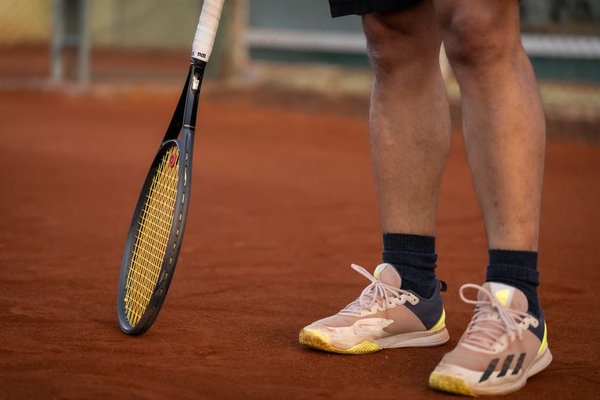
Tennis shoes are not just about comfort or brand preference. The court under your feet changes how much grip you need, how easily you should be able to slide, and how quickly an outsole wears down. A shoe that feels secure on hard court can feel too sticky on clay, while a clay-specific outsole may wear much faster on abrasive acrylic courts.
The simplest way to choose tennis shoes for court surfaces is to match the outsole, support, and durability to the surface you play on most. Hard, clay, and grass courts each reward a different balance of traction and movement, so understanding those differences can make footwork more predictable and help your shoes last longer.
Why Court Surface Changes Your Shoe Choice
Tennis involves repeated starts, stops, lateral cuts, split steps, and direction changes. The outsole controls how those movements interact with the court. Too much grip can make movement feel abrupt; too little can leave you slipping when you plant for a shot.
Surface also affects wear. Hard courts are rough on rubber. Clay is softer but loose, so the outsole needs grooves that bite without becoming packed with clay. Grass can be slick, particularly when damp or worn, so traction matters while the sole also needs to avoid damaging the turf.
Hard Court Tennis Shoes: Durability and Cushioning
Hard courts are demanding on footwear. Acrylic-coated asphalt or concrete creates consistent traction, but the firmness can grind down softer rubber quickly. Hard court tennis shoes therefore tend to use tougher outsoles and supportive uppers built for frequent lateral movement.
A modified herringbone or mixed tread pattern is common because it offers grip without locking the foot completely to the surface. Cushioning also matters because hard courts provide little natural give, so a well-cushioned midsole can make repeated sessions more comfortable.
What to look for on hard courts
Choose a tennis shoe outsole with durable rubber in high-wear areas, especially beneath the forefoot and outer edge. Look for secure lateral support, enough toe protection if you drag the front of the shoe, and cushioning that feels stable rather than overly soft.
For example, if you play two or three times a week on public hard courts and the outer forefoot becomes smooth first, prioritise durability over the lightest possible shoe. A slightly heavier model with reinforced rubber may last longer than a speed-focused shoe with a thinner outsole.
Clay Court Tennis Shoes: Grip and Controlled Sliding
Clay court tennis shoes solve a different problem. Loose clay reduces traction, but controlled sliding is also part of movement on the surface. The goal is not maximum grip at all times; it is predictable grip that lets you move, slide, and recover without the outsole filling with clay.
The classic solution is a full herringbone or zig-zag tread. The grooves create edges that bite into the surface while helping shed clay as you move. If the grooves become packed, traction can become less consistent.
What to look for on clay
Prioritise a herringbone-style outsole, strong lateral support, and an upper that keeps your foot secure during slides. Durable sidewalls can also help because sliding creates abrasion around the edges of the shoe.
If you mainly play on clay, a surface-specific model is usually worthwhile. Keep a small brush in your tennis bag and clear compacted clay from the outsole after a session. That simple habit helps preserve the tread and makes wear easier to spot.
Grass Court Tennis Shoes: Traction Without Turf Damage
Grass court tennis shoes are less common because relatively few recreational players have regular access to natural grass. Their outsole design is distinctive: instead of deep aggressive lugs, they typically use small rounded pimples or low-profile traction elements that help grip the turf without digging into it excessively.
Grass can become slippery when damp, worn, or polished by repeated play, so dependable traction is essential. Because natural grass is softer than hard court, outsole durability is usually less of a concern than grip and protecting the playing surface.
Check the venue rules
Some grass facilities have footwear rules designed to protect the court. If you are booking a grass-court club or tournament venue, check its shoe requirements before arriving. A shoe described as suitable for grass by a manufacturer may still need to meet the venue’s own policy.
Can One Pair Work on More Than One Surface?
Yes, particularly if most of your tennis is on hard courts with occasional play elsewhere. Many all-court models use a versatile tennis shoe outsole that balances grip and durability. They are often the most practical choice for recreational players who do not want separate pairs.
The compromise is more noticeable if you play frequently on clay. A true clay outsole generally clears loose material better and supports sliding more naturally. On grass, a dedicated grass outsole can offer better traction while being kinder to the turf. If you split your schedule evenly between surfaces, two pairs can make more sense than asking one outsole to do everything.
Useful related topics for building a complete setup include tennis equipment checklist, tennis court surface guide, and how to choose a tennis racket.
Fit and Support Still Matter
Surface-specific tread will not help if the shoe does not hold your foot properly. Your heel should feel secure, the midfoot should not slide inside the upper, and your toes need enough room to avoid repeated impact during sudden stops.
Try tennis shoes with the socks you normally wear and perform a few controlled side steps and split-step movements. The shoe should feel stable without pinching. Players with persistent foot or ankle problems should seek professional footwear or medical advice rather than relying only on surface labels.
FAQ
Are hard court tennis shoes suitable for clay?
They can work for occasional clay play, especially for recreational players, but they may not release clay as efficiently as a dedicated herringbone outsole. Frequent clay players usually benefit from clay court tennis shoes for more predictable traction and sliding.
Can clay court tennis shoes be used on hard courts?
They can, but hard courts may wear their tread faster. If you regularly play on hard courts, a hard-court or all-court outsole is generally a better durability match.
Why are grass court tennis shoes different?
Grass court tennis shoes use traction patterns intended to grip a potentially slippery natural surface without causing unnecessary damage. Small pimpled or low-profile elements are common.
How do I know when the outsole is worn out?
Look for smooth patches, reduced tread depth, uneven wear, or a noticeable loss of predictable traction. If movement feels less secure even though the upper still looks good, the outsole may be the limiting factor.
Choose for the Surface You Actually Play On
The best tennis shoe is the one whose outsole and support match the court beneath you. Hard courts call for durability and cushioning, clay rewards herringbone traction and controlled sliding, and grass needs dependable grip with a turf-friendly sole. Start with your main playing surface, then consider how often you move between courts. That gives you a practical way to choose footwear that supports your movement instead of fighting it.