
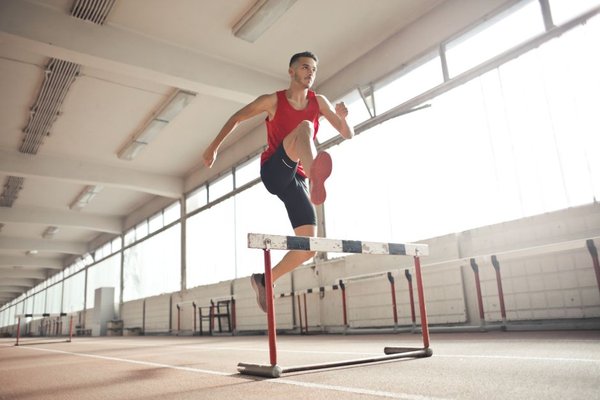
The 110 meter hurdles looks like a sprint interrupted by ten barriers, but the best athletes make those interruptions almost disappear. Their secret is not jumping higher. It is preserving speed through a repeatable sequence of acceleration, takeoff, clearance, and fast running between hurdles. Understanding that sequence makes 110 meter hurdles technique easier to practise and easier to troubleshoot.
Understand the Race Before Changing Your Form
In the senior men’s event, ten hurdles stand 1.067 metres high. The first is 13.72 metres from the start, the hurdles are 9.14 metres apart, and the finish lies 14.02 metres beyond the last one. Those fixed distances explain why efficient mechanics matter: every unnecessary upward movement or long landing reduces the space available for the next three strides. Younger age groups may race over lower hurdles, so training height should match the athlete’s competition level.
Build a Reliable Approach to the First Hurdle
The first hurdle establishes the rhythm of the entire race. Most competitive hurdlers use seven or eight steps from the blocks, choosing a pattern that fits their acceleration, strength, and leg preference. An athlete should not copy a faster runner’s step count if it forces a reach or a stutter before takeoff.
Accelerate Without Standing Up Too Early
Push strongly through the first steps, letting the torso rise progressively rather than popping upright immediately. As the barrier approaches, shift attention from the top rail to the takeoff position. The final approach step is usually controlled and relatively quick, helping the athlete place the takeoff foot beneath a stable body rather than reaching ahead.
A useful test is to record three starts to the first hurdle. If the takeoff point moves noticeably between attempts, adjust the block setup or early step pattern before working on faster clearance.
Take Off Forward, Not Upward
Hurdle clearance begins on the ground. The takeoff leg drives the body forward while the lead knee attacks the barrier. The hurdler needs enough height to clear the rail, but excessive vertical lift creates extra flight time and often leads to a heavy landing. Takeoff distance varies with an athlete’s speed and proportions; focus on a consistent departure that lets the hips travel forward.
Lead Leg Technique: Knee First, Then Down
Effective lead leg technique starts with a forceful knee drive. As the thigh rises toward the hurdle, the lower leg opens to clear the rail. Trying to kick a straight leg from the beginning commonly sends the foot too high and the upper body backward.
Once the lead foot passes the barrier, actively bring it down underneath the body. Keep the toes lifted and avoid reaching for the ground far ahead, which creates a braking contact. The goal is a quick, balanced landing that feels like the continuation of sprinting, not the end of a jump.
Trail Leg Technique: Recover Quickly Into Running
The trail leg supplies the push at takeoff, then folds at the knee as it travels around the side of the hurdle. The knee should recover forward rather than stay stranded behind the hips. A compact, fast recovery helps set up the first step after landing.
Good trail leg technique also depends on posture. If the shoulders twist dramatically to pull the leg through, the athlete may drift sideways or lose momentum. Practise bringing the trail knee through while keeping the chest and hips generally directed down the lane.
Find the Three-Step Hurdle Rhythm
For proficient sprint hurdlers, the usual pattern is three steps between barriers. After the lead foot lands, the trail foot makes the first intervening contact; the lead foot makes the second; and the trail foot makes the third before driving into the next clearance. This pattern returns the same lead leg to each hurdle.
Those three steps should not feel like three equally long bounds. The athlete runs off the landing, maintains a quick middle step, and controls the final step so the takeoff foot does not land too far in front. A reaching final step is a common reason athletes suddenly feel too close to the next hurdle.
Use Your Arms to Protect Balance
The arms counterbalance rapid changes in leg position. As the lead knee rises, the opposite arm moves naturally forward, then recovers without a wide sweep across the body. Keep the shoulders relaxed and avoid lifting the head to check the hurdle underneath you. The related guide sprint start technique can help with the acceleration phase.
Three Practical 110m Hurdles Drills
Lead-Leg Walkovers
Stand beside a low hurdle and rehearse driving the lead knee, extending over the rail, and bringing the foot down. Start slowly so the movement remains controlled; increase speed only when the path is consistent.
Trail-Leg Side Passes
Move beside a low hurdle with the support foot travelling along the track. Bring the bent trail knee around and forward without swinging the entire torso. Both legs can be trained for coordination even if one is preferred in racing.
Reduced-Spacing Rhythm Runs
Set three to five appropriately low hurdles closer together than race spacing, with a qualified coach supervising the layout. Sprint through using a smooth three-step pattern, then gradually increase the spacing as timing improves. This is more productive than stretching strides to survive full competition spacing too soon. For complementary practice, see sprint acceleration drills and running form basics.
Fix the Mistake That Appears First
If the athlete floats over hurdles, check whether takeoff is too vertical or the lead leg is kicking too early. If the first step after landing is slow, check the lead foot’s touchdown and trail knee’s recovery. If the athlete chops or stutters before the next barrier, inspect the previous landing rather than assuming the spacing is wrong.
Use short video clips from the side and front, preferably with a coach, to change one cue at a time. Working at controlled speeds and suitable heights makes technical corrections safer and more repeatable than forcing them during all-out efforts.
Frequently Asked Questions
How many steps should I take to the first hurdle?
Seven or eight is common among competitive men’s 110m hurdlers, but the right count depends on acceleration and individual mechanics. Consistent takeoff matters more than copying a particular number.
Why do hurdlers take three steps between hurdles?
Three fast steps help maintain sprinting speed and allow the same leg to lead at successive barriers. Developing athletes can begin with adjusted hurdle spacing before progressing toward regulation distances.
Should I try to jump higher over the hurdle?
No. Clear the rail safely while directing momentum forward. Excess height usually increases airborne time and makes the next landing harder to control.
Can I train both lead legs?
Yes. Practising both sides can improve mobility and coordination, although competitive sprint hurdlers typically develop a preferred leg for a regular three-step rhythm.
Make Every Clearance Lead Into the Next Sprint
The clearest sign of progress is not how dramatic a hurdle clearance looks. It is how quickly the athlete returns to fast, balanced running. Build the start, refine the lead and trail legs, and connect the movements with a reliable rhythm. Over ten barriers, those small, repeatable gains make the race feel like one uninterrupted sprint.