
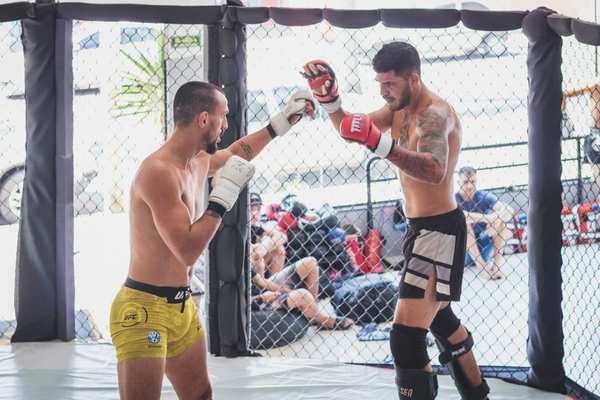
A clean right hand can end an MMA fight in seconds. So can a choke that begins with an ordinary-looking takedown. The real difference in MMA striking vs grappling is not simply punches against submissions. It is how each skill set changes distance, limits an opponent’s options, and creates a path to victory. Most fights move between these exchanges, often several times in the same minute.
Striking and Grappling at a Glance
MMA striking uses legal punches, kicks, knees, and elbows to land meaningful attacks. It relies on timing, accuracy, footwork, and distance management. Grappling uses grips, body positioning, balance, takedowns, escapes, and submission threats to control an opponent or improve position. Ground-and-pound combines the two: one fighter establishes control and then strikes.
The clearest comparison is about what each specialist tries to control. A striker usually wants room to attack without being tied up. A grappler often wants physical connection, where leverage and positional skills can reduce that space. Neither approach works independently in modern MMA because every attack creates a possible response from the other discipline.
Where MMA Striking Has the Advantage
Range, Timing, and Damage
At long range, a skilled striker can use kicks and jabs to measure distance, disrupt an opponent’s rhythm, and score damaging blows. At boxing range, combinations and defensive movement become especially valuable. Good MMA striking is not just about hitting hard; it also means recognizing when an opponent is preparing to change levels or close into a clinch.
Striking can produce a knockout or technical knockout without requiring prolonged control. It also gives fighters tools for managing the pace. A low kick may discourage forward movement, while a jab can interrupt the setup for a takedown. But careless kicks and overcommitted punches can offer a grappler the chance to catch a leg or enter on the hips.
Where MMA Grappling Has the Advantage
Takedowns and Positional Control
MMA grappling becomes especially influential when a fighter can turn a standing exchange into a clinch, takedown, or ground position. Wrestling offers single-leg and double-leg attacks, body locks, and pressure against the fence. Once on the mat, the grappler may try to pass guard, hold a dominant position, or create openings for strikes.
Submissions and the Cost of Small Mistakes
Brazilian jiu-jitsu and other grappling styles give fighters ways to finish through chokes and joint locks. A misplaced arm, exposed neck, or failed escape can be costly even when the grappler has landed few strikes. However, submissions require timing and position. A strong grappler who cannot complete takedowns or maintain control may struggle against an opponent who consistently disengages.
The Clinch Is Where the Two Styles Meet
The clinch makes the striker vs grappler comparison more interesting. With fighters chest-to-chest or fighting for head and arm position, a striker may land short punches, knees, or elbows. A grappler may pursue an underhook, body lock, trip, or takedown. The same exchange can switch from striking to wrestling and back before either fighter gains an advantage.
The fence adds another layer. Pressing someone against it can limit their escape routes, but simply holding them there is not automatically meaningful offense. The important questions are what attacks follow, whether the opponent is forced into dangerous defensive reactions, and who can separate or reverse the position. For more on these transitions, a guide to MMA clinch techniques offers a useful next step.
Striker vs Grappler: What Actually Decides the Matchup?
A classic matchup features a mobile striker trying to stay in open space while a wrestler cuts off the cage and seeks contact. Yet labels can mislead. A striker with excellent takedown defense may keep the contest standing; a grappler with an improving jab may enter safely without shooting from too far away.
How Judges Evaluate Striking and Grappling
Under the Unified Rules framework, effective striking and effective grappling are the primary scoring considerations. The impact and results of offense matter: damaging legal strikes, effective submission attempts, and grappling actions that create meaningful attacks or advantages. A takedown is not necessarily worth more than clean striking merely because it changes where the fight takes place.
Likewise, defensive movement, blocked strikes, or time spent holding a position should not be mistaken for automatic scoring. Effective aggressiveness and control of the fighting area become relevant only when the more important offensive criteria cannot separate the fighters. This helps explain why a busy striker can win a round despite being taken down, or why a grappler can win without landing many standing punches.
How Fighters Blend Both Skill Sets
Consider a striker who repeatedly lands a jab as a wrestler approaches. On the next entry, the wrestler feints a punch, changes levels, and reaches for the legs. The striker sprawls, uses an underhook to regain posture, and circles away from the fence. Neither athlete has abandoned a specialty; each is using the other side of MMA to make their preferred game possible.
A practical training drill mirrors that sequence: begin at striking distance, let one partner initiate a controlled takedown entry, then have both work toward either safe separation or a stable clinch position. Reset and switch roles. With coaching and appropriate protective equipment, this teaches the connection between footwork, timing, balance, and grappling defense rather than treating them as unrelated MMA fighting skills.
For someone building a balanced game, studying takedown defense for strikers and the basics of ground positions can be as valuable as adding another punching combination. A strong specialist needs enough competence in the opposite area to return the contest to favorable terms.
Frequently Asked Questions
Is Striking or Grappling More Effective in MMA?
Neither is universally superior. Effectiveness depends on the opponent, distance, technical skill, conditioning, and ability to connect attacks. Striking offers immediate damage opportunities; grappling can produce control and submissions. The strongest results usually come from making both threats credible.
Can a Striker Beat a Better Grappler?
Yes. A striker who manages distance, defends takedowns, and escapes clinches can keep a bout in favorable exchanges. But a striking advantage can disappear quickly if repeated takedowns lead to sustained offensive grappling.
Does a Takedown Automatically Win a Round?
No. Judges prioritize effective offense. A takedown that leads to impactful strikes, a serious submission attempt, or productive positional work carries more weight than one with little meaningful follow-up.
Should Beginners Learn Striking or Grappling First?
Either can be a starting point, but a well-coached MMA program should gradually introduce both. Basic stance, safe defensive habits, takedown awareness, and positional escapes create a more useful foundation than specializing before understanding how the phases connect.
Conclusion
The essential difference between MMA striking and grappling is how each creates opportunities: one primarily attacks through blows, while the other changes position and uses control, transitions, and submissions. Their overlap is what makes MMA distinctive. The most capable fighters do not merely alternate between two separate styles; they use each threat to improve the other, from the first jab to the final scramble.